Resources
The resources (town cards, money, playing pieces) for the original David Watts game looked as though they had been printed on a child's printing set, and considering the timeframe, they probably have. The Games Workshop ones weren't much better, the counters were plastic trains that looked as though they came out of cheap Christmas crackers and the money was a poor knock off of Monopoly.
I had a go at making something a bit slicker (with some help from AI).
The Playing Pieces
Rather than plastic cracker toys, the playing pieces in Rail Victoria are represented by famous trains. These are somewhat anachronistic as none of them are in fact Victorian at all as I wanted some names that people who were not complete train buffs would recogonize!
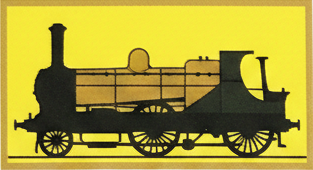
Before there were mighty express trains, there was Stephenson's Rocket. This plucky pioneer, built in 1829, wasn't just a locomotive; it was a revolution. Its innovative design swept the Rainhill Trials, proving once and for all that steam was the future of transport. Play with the Rocket to remember where it all began, and command the very spirit of railway invention.
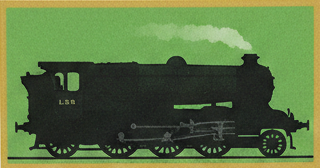
The name itself conjures images of speed and grandeur – it's the Flying Scotsman. This legendary LNER Class A3 broke records and captured hearts, becoming the first steam locomotive officially recorded at 100 mph. Adorned in its iconic apple green livery, the Scotsman represents the golden age of luxury express travel. Choose this icon to dominate the tracks with timeless elegance and unmatched renown.
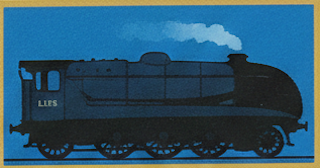
If speed is your passion, then the streamlined Mallard is your champion. This aerodynamic marvel, an LNER Class A4, thundered into the history books in 1938, setting the world speed record for steam at a breathtaking 126 mph – a record that still stands today! Its distinctive garter blue and sleek lines make it instantly recognizable as a pinnacle of engineering. Take command of Mallard to leave all challengers in your dust.
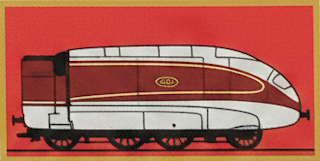
Experience the grandeur and power of the London Midland & Scottish Railway with the magnificent Duchess of Hamilton. This streamlined Coronation Class locomotive, resplendent in crimson and gold, was designed to challenge the LNER's speed records with luxurious style. A true emblem of inter-company rivalry and engineering might, the Duchess represents the very best of British express passenger travel. Select the Duchess of Hamilton to command the track with undeniable presence and formidable strength.
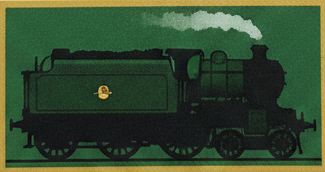
Just before steam diminished and went into the west, Evening Star was the last steam locomotive ever built by British Railways in 1960. Unlike the sleek express engines, the 9F was a massive, powerful freight hauler with ten small driving wheels. Tougher and more industrial than than the passenger engines, it represents the heavy freight side of the railways. Play with Evening Star for a final touch of nostalgia with a dying breed of giants
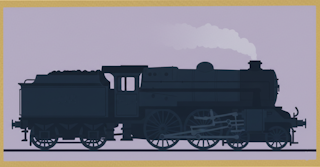
And then there is Tornado, the engine that shouldn't exist; the train built from scratch by lovers of steam, long after the technology was officially killed off. Built in 2008 by enthusiasts, it is currently running on mainline track in UK and abroad. Tornado possibly has the power to beat Mallard's speed record, but we will probably never know as she is not allowed to run at her full speed. Select Tornado to see what modern technology can bring to classic design.
The Money
The "bank notes" included are also anachronistic, in that Queen Victoria's head never actually appeared on the notes issued in her reign. But as the game is named after her, I felt she needed to be depicted. Each denomination features a famous bridge built during her reign.
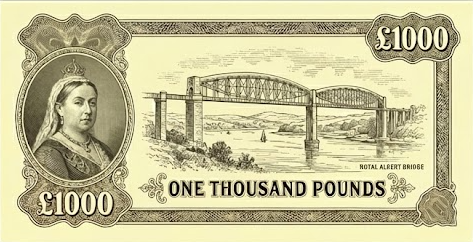
The £1000 note shows the "Royal Albert Bridge" which spans the River Tamar between Devon and Cornwall. It was designed by Isambard Kingdom Brunel and completed in 1859 when it was opened by Prince Albert himself. Brunel died the same year and there is a plaque commemorating him on the bridge itself. It has been in constant use since then
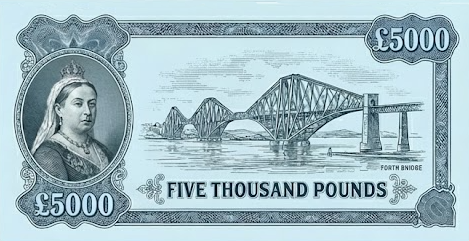
The £5000 note shows the Forth Bridge, the most important and iconic bridge in Scotland. It was opened in 1890 by the future Edward VII in his Scottish role as Duke of Rothsay. It carries the main line traffic from Aberdeen and Dundee to Edinburgh, and until 1919 was the longest rail bridge in the world. It is still very actively in use, and although it is a UNESCO World Heritage site, it is important to remember that it is also vital for the Scottish economy.
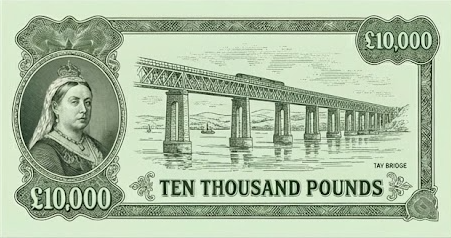
The £10,000 note depicts the Tay Bridge, which connects Dundee, Aberdeen and Edinburgh. The first Tay bridge was opened in 1878, but in 1879 it suddenly collapsed while a train was crossing it, killing everyone on board. In spite of this, Victorian engineering picked itself up and the bridge was reopened with an improved design in 1887. The original train which plummeted into the river, renamed with considerable insensitivity "The Diver" was later to cross the restored bridge. The second bridge is still in use."
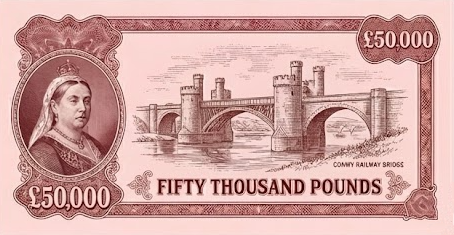
The £50,000 note shows the Conwy Railway bridge in Wales which was designed by Robert Stephenson. It was opened in 1849 and features a tunnel-like rigid tube which is able to be self-supporting over the width of the river. It is still in active use.